메시지를 남겨주세요
저희 제품에 관심이 있으시고 더 자세한 정보를 원하시면 여기에 메시지를 남겨주세요. 최대한 빨리 답변드리겠습니다.

When the application of WPC (Wood-Plastic Composite) shifts from a standard residential patio to heavy-duty port piers, coastal boardwalks, or small bridge decks, the engineering requirements change dramatically.
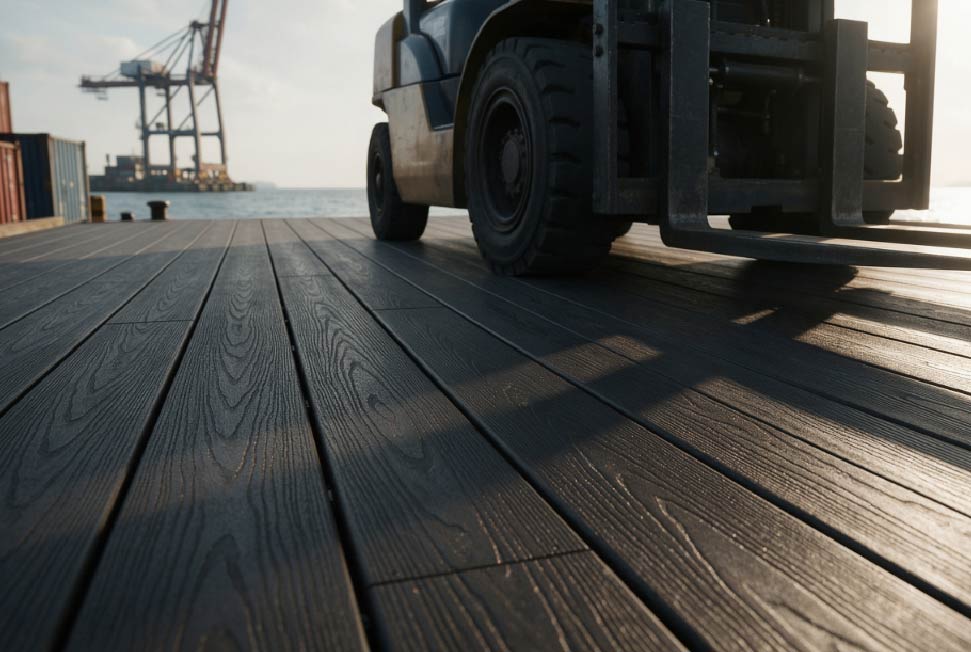
One of the most common questions we hear from project managers and structural engineers is: Can WPC really withstand such heavy loads?
The answer is yes. However, to use WPC safely in heavy-duty projects, relying solely on the material's compressive strength is not enough. The real technical challenge lies in solving the tensile stress at the bottom of the board. Today, we are sharing the core reinforcement rules for heavy-duty WPC engineering, proven through years of market practice.
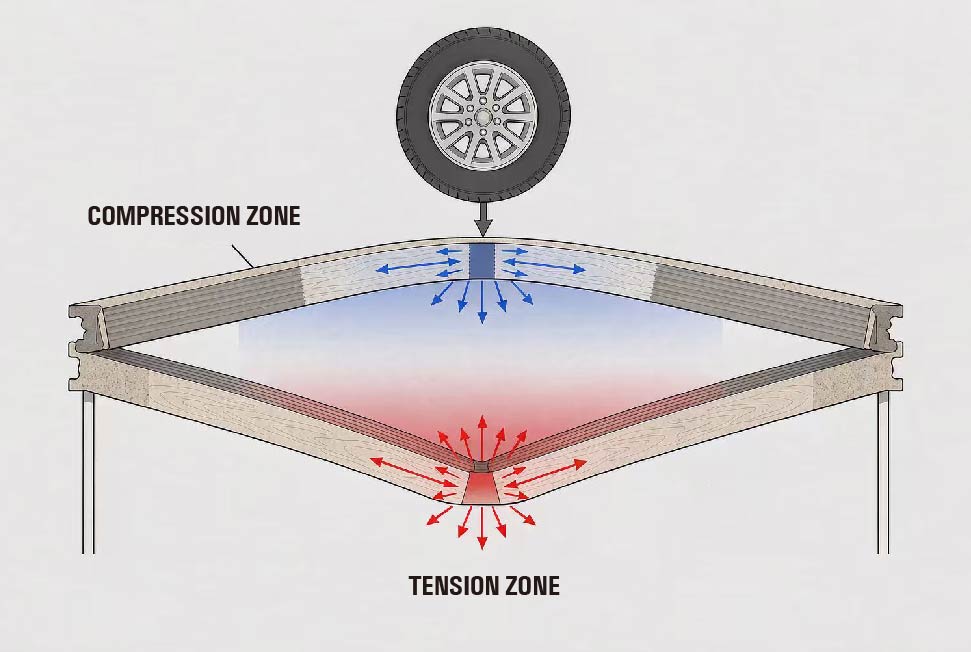
To solve the problem, you first need to understand the material. WPC has excellent compressive strength (withstand the downward pressure from foot traffic and heavy objects). However, in large-span applications, its tensile strength (the pulling force at the bottom) is relatively weaker.
When heavy vehicles or dense crowds press down on the center of a bridge deck, massive tensile stress is generated at the bottom of the board. If the underlying support or the board's structure is insufficient, the deck will bend.
Through long-term practical application in heavy-duty projects, the industry has developed three reinforcement solutions that balance performance and cost. These are the key factors we focus on when providing engineering selections for our global clients:
Solution 1: The "Golden Rule" of Bottom Reinforcement
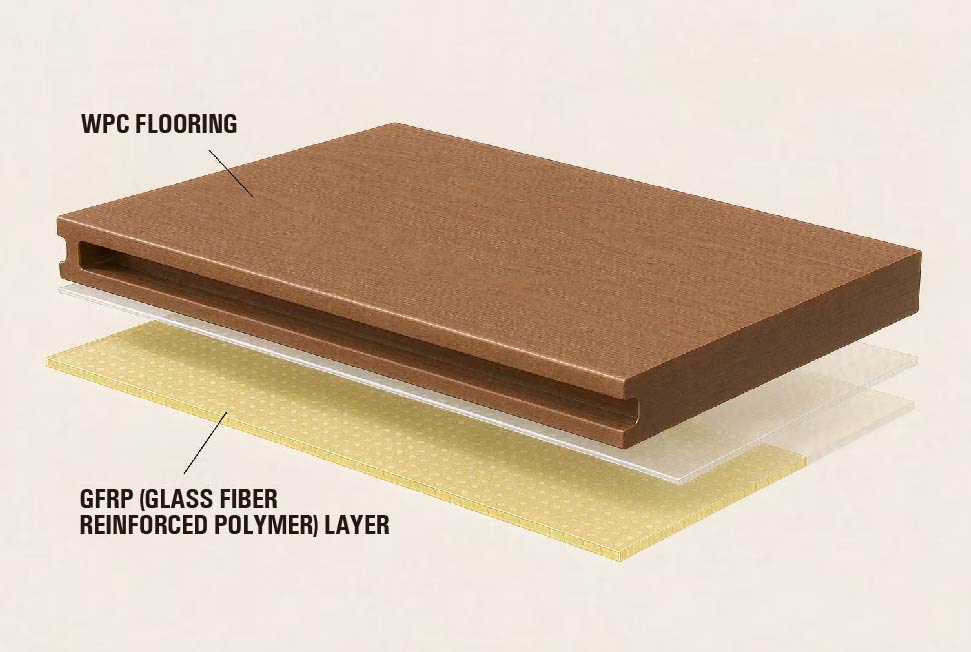
In high-end heavy-duty engineering, compositing a single layer of GFRP (Glass Fiber-Reinforced Polymer) to the bottom of the WPC board is a highly recognized and efficient solution. Glass fiber has incredible tensile strength; bonding it to the tension side of the board significantly boosts overall load-bearing capacity.
Solution 2: The "Hardcore Choice" of Structural Priority
If you want to avoid the hassle and cost of GFRP, the most direct solution is to change the board's physical structure. For high-load piers and bridges, never use standard thin-walled hollow decking. You must choose high-density, fully solid WPC decking or ultra-thick-walled multi-hole profiles. These are extremely dense and distribute stress evenly, providing exceptional inherent bending and compressive resistance against heavy impacts.
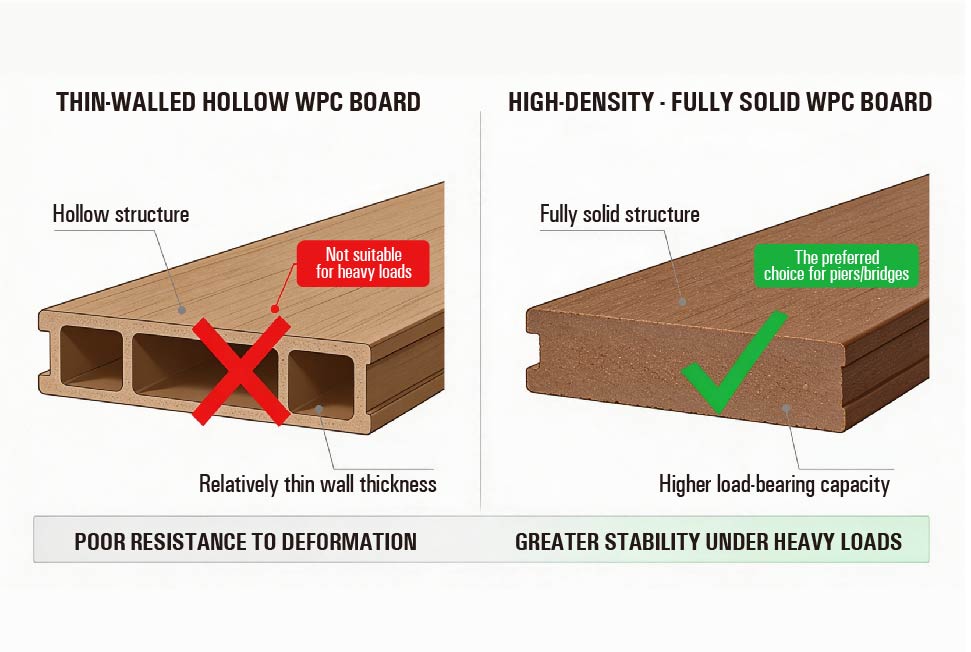
Solution 3: The "Anchor" of Base Reinforcement
A great board means nothing if the underlying joists fail. In bridge and pier projects, traditional treated timber joists easily rot and break, while metal joists are prone to rust. The perfect "base" is a fully solid WPC joist. It offers immense load-bearing capacity and superior screw-holding power, forming a perfect "all-WPC anti-corrosion load-bearing system" with the decking above.
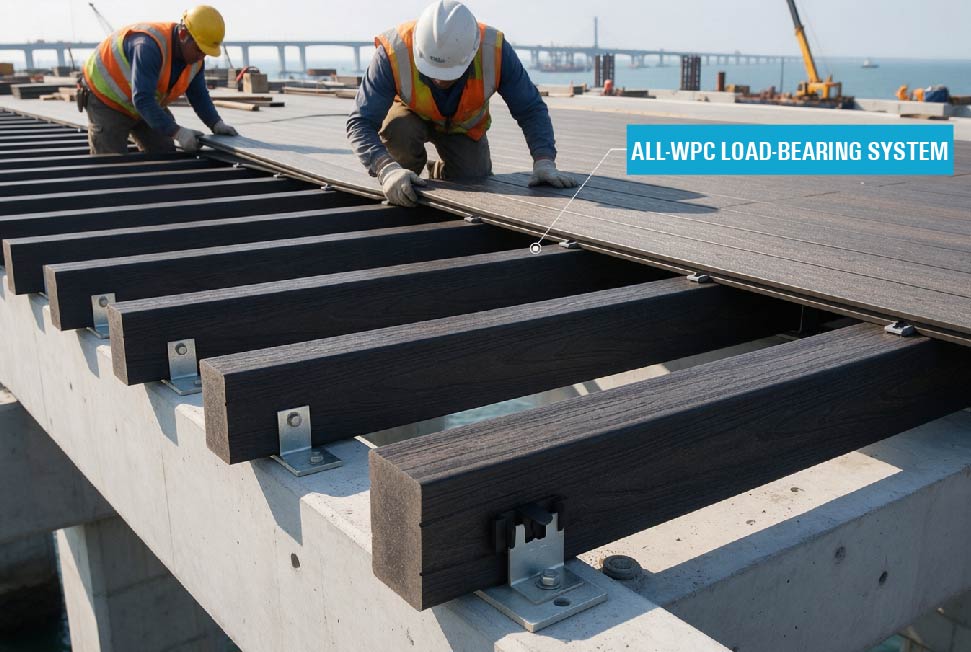
SenLai: Your One-Stop Provider for Heavy-Duty Load-Bearing Solutions
As a direct manufacturer, we do not recommend that clients blindly experiment or over-spend on expensive materials for heavy-duty projects. Our goal is to help you build the most solid, maintenance-free outdoor infrastructure at the most reasonable cost.
If you are planning a pier, bridge, or large municipal boardwalk project, our engineering team is here to help. From fully solid WPC decking to high-strength solid joists, and matching hidden clip systems, we provide one-stop, cost-effective selection support.


